Learning Outcomes
i. Define vascular plants and identify their distinguishing features.
ii. Understand the structure and function of xylem and phloem, the specialized transport tissues of vascular plants.
iii. Recognize the significance of roots, stems, and leaves in vascular plants.
iv. Discuss the evolutionary significance of vascularization in plant development.
v. Appreciate the diversity and ecological importance of vascular plants.
Introduction
In the realm of plants, vascular plants stand out as a remarkable group, characterized by their ability to transport water and nutrients throughout their complex bodies. Unlike their non-vascular counterparts, bryophytes, vascular plants possess specialized transport tissues, xylem and phloem, that enable them to grow taller and live in a wider range of environments.
i. Xylem: The Water Highway
Xylem, the specialized tissue responsible for transporting water from roots to shoots, is composed of elongated, hollow cells called tracheids and vessel elements. These cells, with their thick, lignified walls, provide a continuous pathway for water to travel upwards, driven by the force of transpiration.
ii. Phloem: The Nutrient Delivery System
Phloem, the complementary transport tissue, delivers nutrients, primarily sugars produced in the leaves, to various parts of the plant. It is composed of sieve tube elements, specialized cells with perforated walls that form a continuous network for nutrient transport.
iii. Roots: Anchors and Absorbers
Roots, the subterranean anchors of vascular plants, play a crucial role in water and nutrient uptake. They penetrate the soil, anchoring the plant and providing a vast surface area for absorption. Specialized root hairs, delicate extensions of root cells, further enhance the surface area for water and nutrient uptake.
iv. Stems: The Transport Corridor
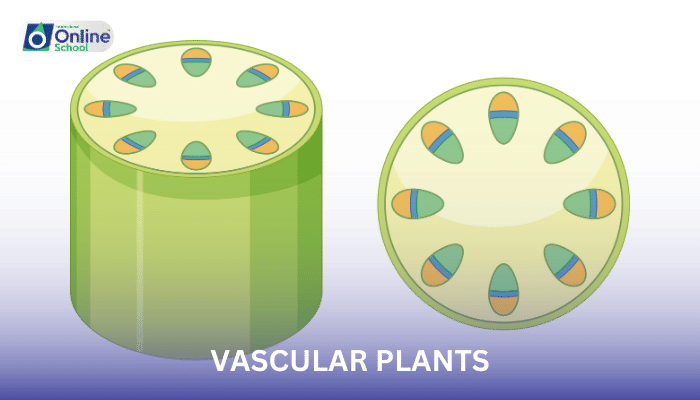
Stems, the supporting structures of vascular plants, provide a framework for leaves and flowers and facilitate the transport of water and nutrients between roots and shoots. They contain vascular bundles, intricate arrangements of xylem and phloem tissues, that act as transport conduits.
v. Leaves: The Photosynthetic Powerhouses
Leaves, the primary sites of photosynthesis, are the food factories of vascular plants. Their broad, thin surfaces, covered with specialized cells called chloroplasts, capture sunlight and convert it into chemical energy through the process of photosynthesis.
vi. Evolutionary Significance: A Landmark in Plant Development
The evolution of vascular tissues, xylem and phloem, marked a pivotal moment in plant evolution. It enabled plants to overcome the limitations of diffusion, the slow process of movement of molecules over short distances, and paved the way for the development of larger, more complex plant forms.
vii. Diversity and Ecological Importance: A Tapestry of Life
Vascular plants, encompassing a vast array of groups, including ferns, gymnosperms, and flowering plants, exhibit remarkable diversity in form, structure, and function. They have colonized a wide range of habitats, from the depths of oceans to the summits of mountains, and play essential roles in maintaining the balance of ecosystems.
Vascular plants, with their intricate transport systems, specialized organs, and remarkable diversity, are a testament to the wonders of plant evolution. Their ability to efficiently transport water and nutrients has enabled them to thrive in a wide range of environments and play a vital role in maintaining the delicate balance of ecosystems. Understanding and appreciating the characteristics, evolutionary significance, and ecological importance of vascular plants deepens our connection to the natural world and fosters a greater appreciation for the diversity of life on Earth.
